
|
Geolinks for
Underground Gas Storage
|
As of today, more than 1,000 Underground Gas Storage sites (UGS) are in operations in the world. The on-going fuel switch to decarbonize mobility and industry requires a significant number of new underground storages to store the newly produced Green Hydrogen.
Allowing safe and cost-effective Hydrogen storage, is a must to achieve the objectives related to limiting global warming.
|
Main Issue
that we solve
|
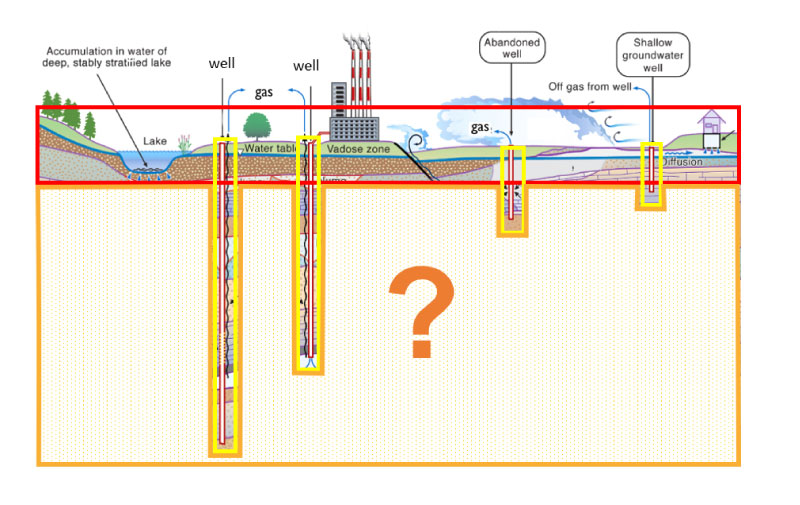
Gas storage sites in porous rocks are already heavily monitored in surface with various technologies such as piezometers, inclinometers, various gas detection systems, satellite imagery for ground deformation.
As part of the Well Integrated Monitoring system (WIMS), the wells are also heavily controlled and monitored.
The risk of induced seismicity is also monitored with the Microseismic technique.
However, as of today, no technology does exist to monitor the underground part of the UGS site. Hence the underground represents the very major part of the geological storage area.
|
What is Geolinks
FlowTerra™ solution ?
|
BREAKTHROUGH TECHNOLOGY: Since our solution does not require seismic sources and does not require dense seismic arrays, it answers in a very cost-effective way to the current lack of underground monitoring solution.
Highly sensitive to rocks saturation changes, our solution will allow to DIAGNOSE any suspicion of diffuse gas leak at depth, MONITOR operations between injection/production wells, and PREDICT water/gas contact..
|
Why to choose
FlowTerra™ for UGS ?
|
ENVIRONMENTALLY FRIENDLY
- Allows safe and cost-effective gas storage
- No need for dense seismic arrays nor seismic sources,
- No disturbance on local communities’ activities
EARLY DETECTION OF DIFFUSE GAS LEAKS
Due to ta higher sensitivity to fluid movement, it enables early detection of leakage paths
CAN BE COMBINED WITH MICROSEISMIC DETECTION
COST EFFECTIVE MONITORING
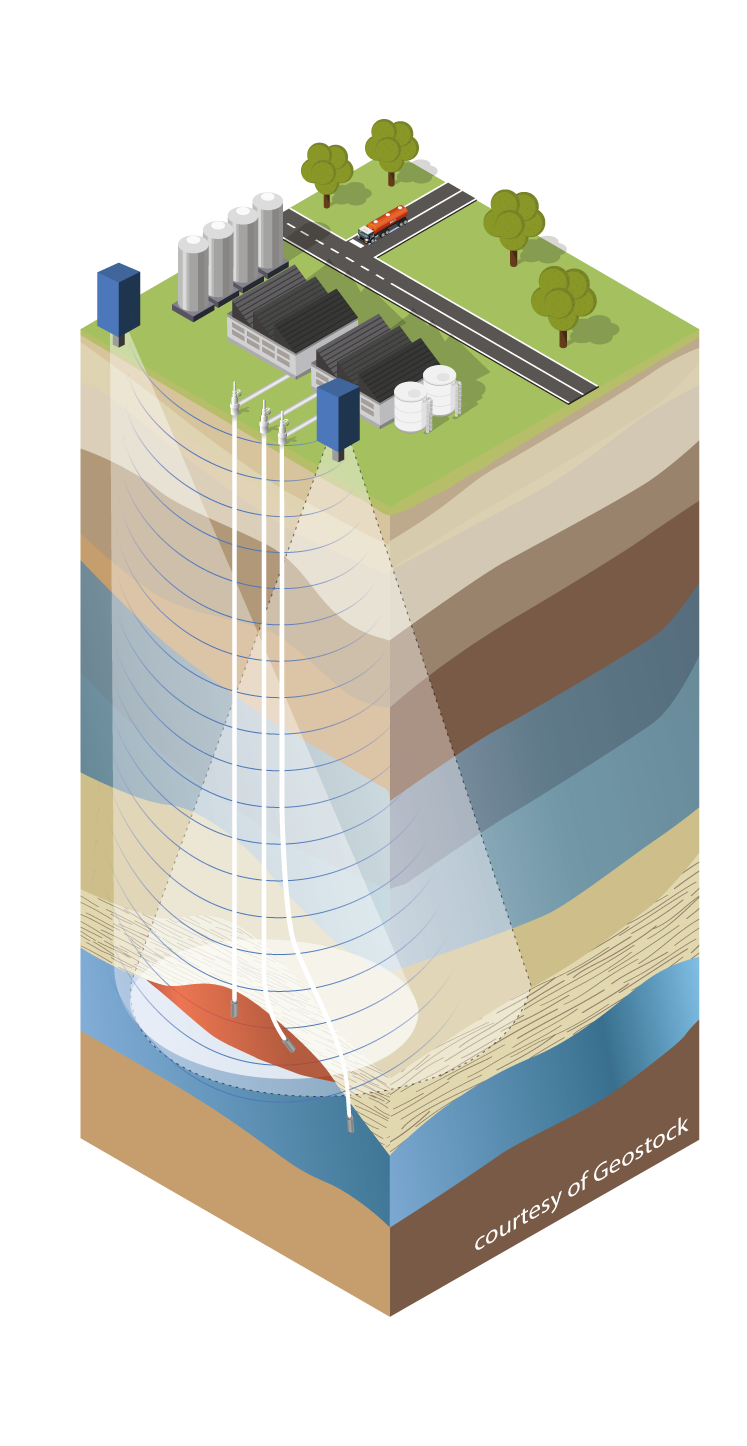
FlowTerra monitoring stations are disposed on the ground, around the UGS facility.
Monitoring can be performed with less than 1 sensor per Km2 .
|
Use Case
|
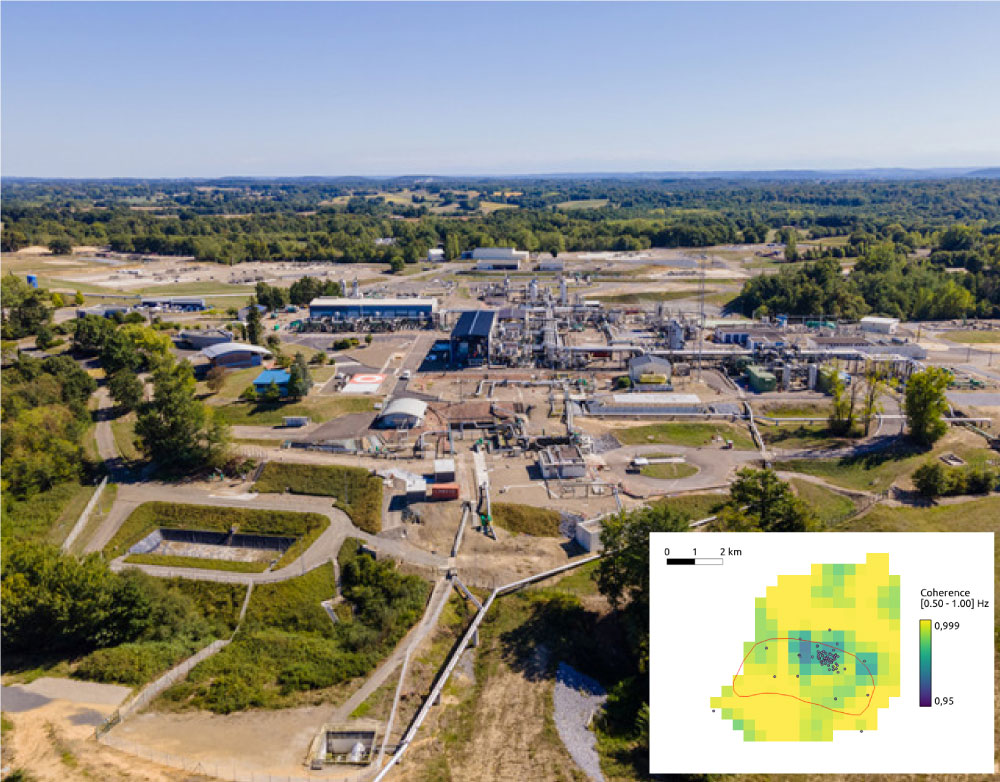
GeoLinks conducted its first large scale field test in 2021 over one underground gas storage facility located in the in south of France.
It demonstrated that :
- The technique developed at the crustal scale was applicable at the UGS scale
- Mapping of saturation/pressure was possible
|
Did you know ?
|
The Rayleigh waves are more sensitive to saturation change than commonly used reflected waves. Moreover, they don’t require dense seismic arrays since they can detect objects at the fraction of the seismic wavelength. They can be easily reconstructed from the ambient noise, so they don’t require to mobilize seismic sources (passive seismic).

Follow us on